



CLARIN ERIC is a European Common Language Resources and Technology Infrastructure, designed to advance and develop the social sciences, the humanities and the technological sciences.
We invite you to explore the CLARIN ERIC Annual Report 2025, which presents essential information about CLARIN ERIC – including its vision, mission, objectives, strategy, governance structure, the accomplishments of national coordinators, the efforts of the committees, a financial overview, published research articles, key performance indicators (KPIs), and more – along with the significant achievements of the member countries.
Currently, CLARIN ERIC has 27 full member countries:
- ● Austria
- ● Belgium
- ● Bulgaria
- ● Croatia
- ● Cyprus
- ● Czech Republic
- ● Denmark
- ● Estonia
- ● Finland
- ● Germany
- ● Greece
- ● Hungary
- ● Iceland
- ● Italy
- ● Latvia
- ● Lithuania
- ● The Netherlands
- ● Norway
- ● Poland
- ● Portugal
- ● Slovenia
- ● Slovak Republic
- ● South Africa
- ● Spain
- ● Sweden
- ● Switzerland
- ● United Kingdom
Key accomplishments and events of the Lithuanian national consortium CLARIN-LT in 2025:
● A cooperation agreement has been signed with the State Agency for Digital Solutions (SDSA) (further information can be found here).
● The first meeting of the Lithuanian Social Science and Humanities Research Infrastructures (SH RRI) was held to explore potential collaboration opportunities (for more information, click here).
● The CLARIN-LT strategy for 2025–2029 has been developed (find out more here).
The report also presents European Union initiatives and projects in which CLARIN ERIC is involved (see Figure 1).
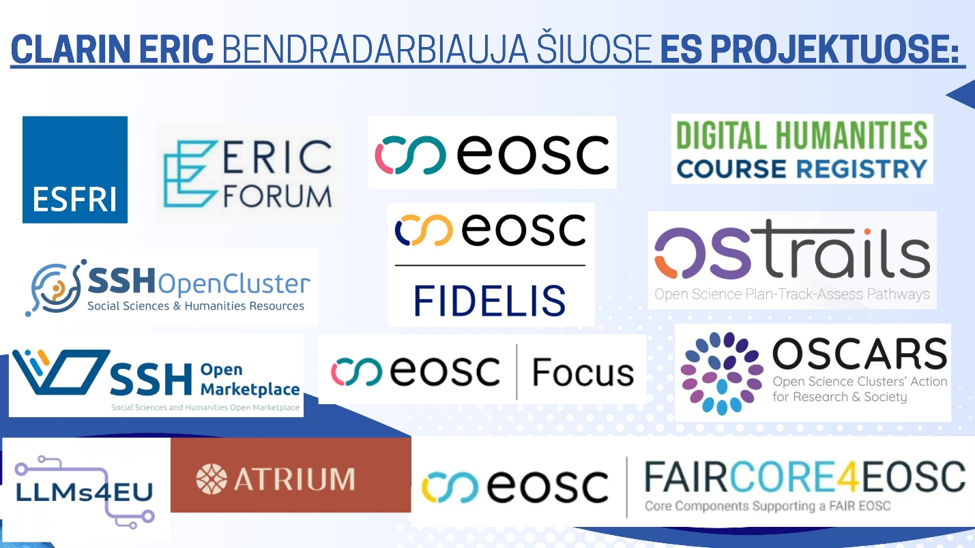
Fig. 1. CLARIN ERIC’s involvement in EU initiatives
Further details regarding the projects illustrated in Figure 1 are available on pages 83–97 of the CLARIN ERIC Annual Report 2025.
Follow CLARIN-LT news on our Facebook account and website.
Leave a Reply
You must be logged in to post a comment.